
albedo effect
Shortlisted for the Montreal International Poetry Prize (2024)

restoring Super 8 film of my father putting up
powerlines in Nunavut fifty years ago feels like unearth;
his wisped body slips in half-time through the bulbed
horizon change, as if spinepressed to the kids
who tried to walk home using those meridians of progress,
there in the marginal flux, waiting for an eager eye,
a glacial wring, a remembrance marker toppled in the melt,
little black specks braided to a blackening snow
the albedo effect is a climate change feedback loop, where global warming leads to increased glacial, sea-ice, and snow melt. the resulting increase in dark surface area leads to a higher intake of solar energy, which in turn leads to increased warming.
In the first months of 2023, my dear friends, Braedan Houtman and Curtis McRae, and I started a writing group, which consisted of meeting once every few weekends for a full day of cooking three delicious meals, catching up, strolling to the nearby coffee shops, and, in the intermediary zones, writing. This poem was born during one of those days when I was trying to emulate the method of Ezra Pound’s “In A Station Of The Metro,” a two-line, 14-word (each word could be a line from a sonnet) imagist poem that explodes into an epic if you spend enough time with it. Bref, having just finished a twenty-page long poem in one of our previous writing sessions, I was trying to write a short poem.
“albedo effect” was also born of perfect circumstances. The first line is semi-true; at the time, I was restoring my family’s dusty VHS tapes, including one that had Super 8 footage of my grandfather Germain (I switched to ‘father’ later to create more immediacy) during his time working in Northern Quebec installing powerlines. I was reading extensively about climate change for work and in preparation for my upcoming MA research, including the heightened effects of a warming planet on Indigenous populations living in the already-precarious north. And I had just read Nadim Roberts’ half-essay half-fiction “Mangilaluk’s Highway,” which revisits the escape of three boys, Bernard Andreason, Lawrence Jack Elanik, and Dennis Dick from the Inuvik Stringer Hall residential school on June 24 1972. They wanted to go home to Tuktoyaktuk, 150km away, by following the new NCPC powerline, crossing rugged Northwest Territoty terrain and several bodies of water. On July 8, 11-year-old Bernard was found alive just eight miles south of Tuktoyaktuk. 11-year-old Lawrence and 13-year-old Dennis had perished along the way.
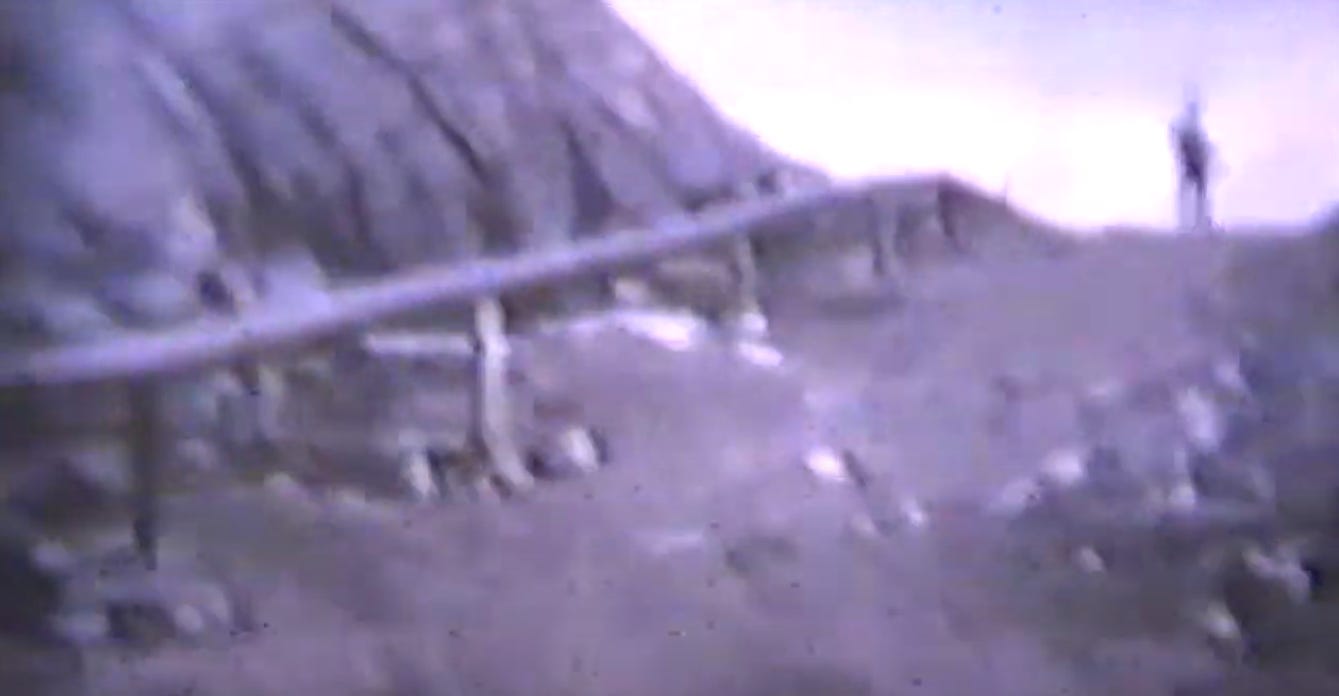
The picture above comes from the aforementioned footage. The tape is old, the footage grainy. Only a few details can be recognized during the 45-minute-or-so runtime: a seaplane landing in a bay, dogs running around, men struggling to walk the northern roads during a gale-winded blizzard, the eternity of Kangiqsualuk ilua (Hudson Bay), and unnamed figures going about their daily lives. I’m struck by many of these images, partly because of their dreamlike movement, partly because they are testament to what my grandfather—of whom I have no memory—saw and lived. But when I watch this footage today one question sits loudly at the forefront: Did any children die trying to walk home following the powerlines he helped put up? This was the question that prompted the first draft of “albedo effect,” which was (Sorry, Ezra) four lines long:
restoring footage of my grandfather installing powerlines
in Nunavut years ago feels like unearth. His spinepressed
body sleeps next to the kids who tried to walk home,
like black specks emerging from a blackening snow.
The poem, as you know, doubled in length. Grief, guilt, and the catastrophe of climate change are just too big of topics to address properly in four lines. But that’s what I wanted to do with this poem: provide one image with the capacity to absorb the intersection of what is too-often mistaken as separate. Powerlines, being these symbols of so-called-progress, progress that has also allowed me the privilege of being nearer to my grandfather in his death, are, too, symbols of a colonial system that has, and continues to, take the lives of children. And while man-made climate change (which should be read as global-colonial-power-structures-facilitating-the-irreversible-destruction-of-ecosystems-for-capital-gain-made climate change) continues to disproportionally affect Indigenous ways-of-being, what truths, what bones, what hidden black specks, will suddenly be exposed?